Supermarket
Access

Access to quality, affordable supermarkets is essential to a healthy community food ecosystem.
Yet many of NYC’s lowest-income neighborhoods still lack dependable, nearby options. There is currently no comprehensive, full scale citywide approach to address this long entrenched problem.
NYC has a responsibility to treat grocery access as core public infrastructure—part of an equitable economic development model. The City’s FRESH program has limited reach and impact. And when gentrification brings new investment, improvements often serve newer, more affluent residents while long-term low- and moderate-income residents continue to face high prices and limited options.
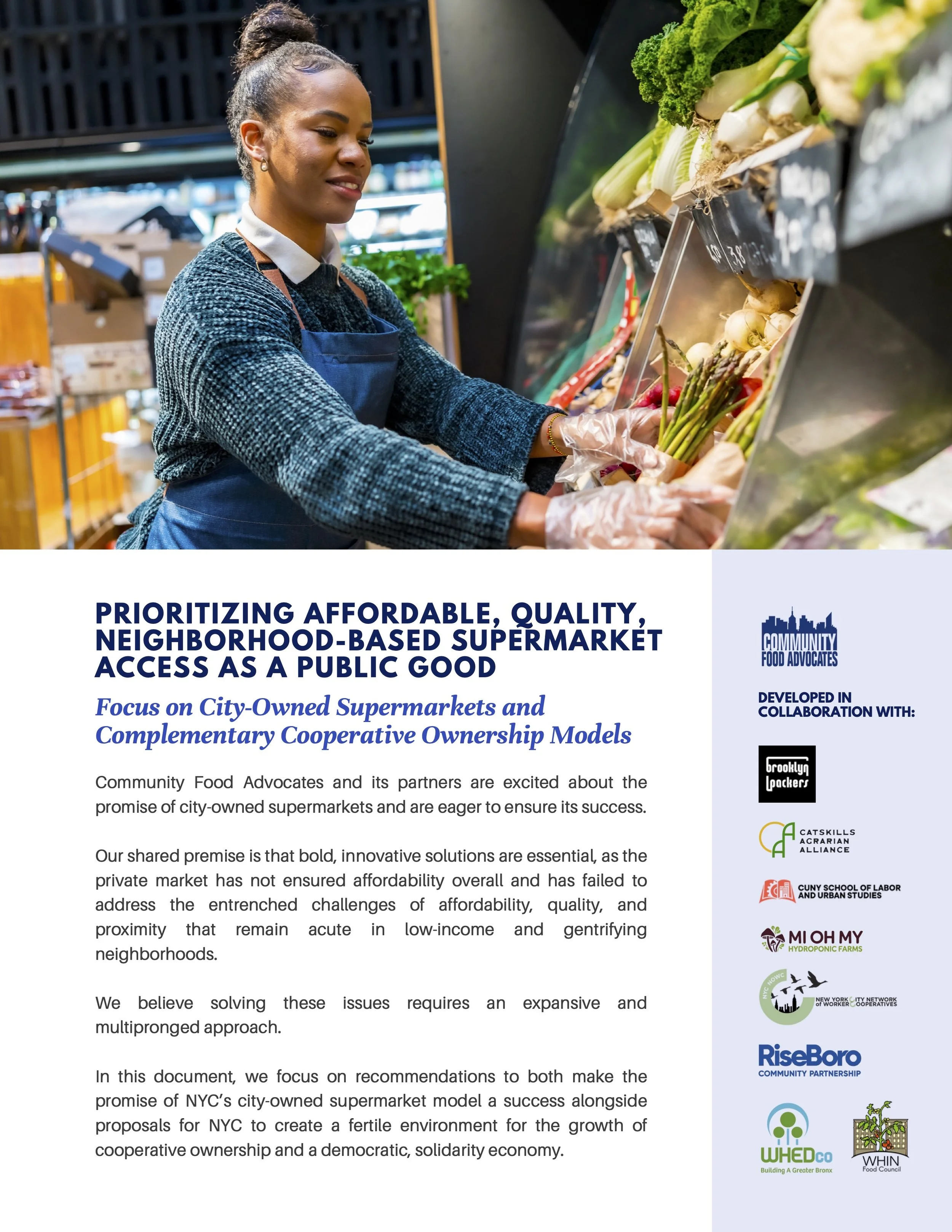
Prioritizing Affordable, Quality, Neighborhood-Based Supermarket Access as a Public Good
Focus on City-Owned Supermarkets and Complementary Cooperative Ownership Models
NOVEMBER 2025:
Community Food Advocates and its partners are excited about the promise of city-owned supermarkets and are eager to ensure its success.
Our shared premise is that bold, innovative solutions are essential, as the private market has not ensured affordability overall and has failed to address the entrenched challenges of affordability, quality, and proximity that remain acute in low-income and gentrifying neighborhoods.
We believe solving these issues requires an expansive and multipronged approach.
In this document, we focus on recommendations to both make the promise of NYC’s city-owned supermarket model a success alongside proposals for NYC to create a fertile environment for the growth of cooperative ownership and a democratic, solidarity economy.
MAY 2023:
NYC Full Service Grocery Access: Policy Recommendations
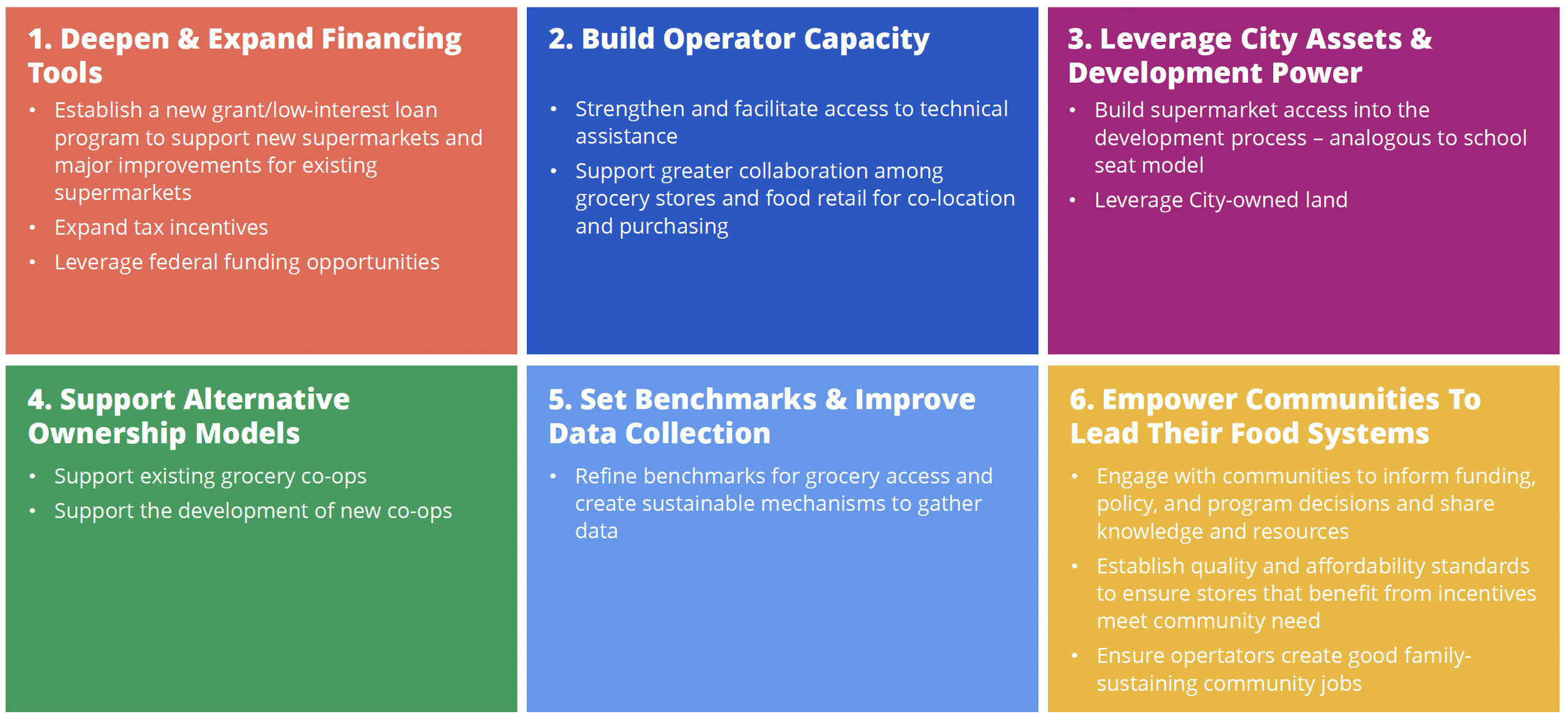
CFA conducted a robust research project around supermarket access in NYC with the goal of bringing together key partners to identify a comprehensive approach to address the issue. In May 2023, CFA published the study and subsequent “NYC Full Service Grocery Access: Policy Recommendations” based on the study findings and engagement with both local and national experts. CFA recommends the following policy and programmatic strategies to achieve this vision, organized around six pillars:
Deepen & Expand Financing Tools
Build Operator Capacity
Leverage City Assets & Development Power
Support Alternative Ownership Models
Set Benchmarks & Improve Data Collection
Empower Communities to Lead Their Food Systems